There is a moment after a storm when the neighborhood goes quiet, and you walk the perimeter of your house looking for missing shingles, dented gutters, and bits of impact on the driveway. Having worked with roofs across North Texas for more than a decade, I have seen how the right shingle choice can mean the difference between a quick Saturday fix and months of claims, leaks, and worry. When a Roofing Contractor Frisco TX evaluates storm-resistant shingles, the decision is never about a brand slogan. It is about measurable performance, proven installation techniques, realistic cost, and how a roof behaves under real weather and time.
Why the choice matters now: intense hail events and high winds are more frequent here than many homeowners expect. Insurance companies pay attention to product testing and installation details. A shingle rated to survive a single hail gust in a lab can still fail on a roof that lacks proper underlayment, fasteners, and flashing. That is why local contractors like Founders Roofing & Construction focus on both product selection and the craft that makes a product perform.
What storm resistance really means
Storm resistance in shingles covers three main threats: wind uplift, hail impact, and water intrusion caused by ripped or displaced shingles. Manufacturers provide lab ratings, but those ratings answer slightly different questions.
Wind ratings tell you whether a shingle resists uplift at certain wind speeds. Typical classes are 60 mph, 110 mph, 130 mph, even 150 mph. Yet wind rating alone is incomplete. How the shingle is fastened, the number of nails per shingle, and whether the roof has hip and ridge reinforcement alter the real-world performance.
Impact resistance is usually expressed as Class 1 through Class 4 under UL 2218. Class 4 means the shingle survived the largest steel ball impact in the test without cracking. That test simulates hail but does not fully replicate angled or repeated strikes. For hail-prone areas in Frisco, choosing Class 4 shingles makes a material difference in limiting fractures that lead to granule loss and leaks.
Water intrusion is a function of the shingle geometry, sealant strength, and the underlayment. Even the best shingle will let water under the deck if the underlayment is compromised or the flashing at valleys, chimneys, and vents is improper.
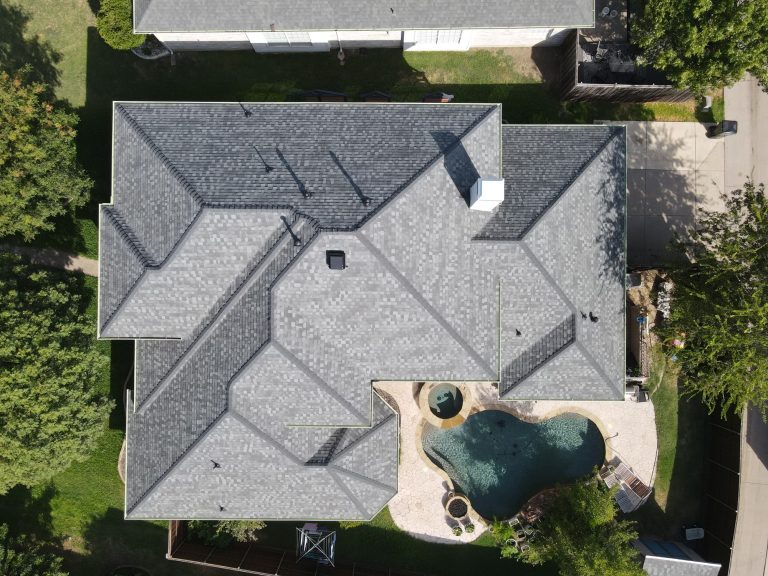
How a Roofing Contractor Frisco TX approaches product selection
Start with the site, not the product. A contractor who understands microclimates and building details begins by examining pitch, exposure, roof penetrations, and historic damage patterns. On a steep, south-facing Roofing Contractor Frisco TX roof that sees consistent sun, UV resistance and thermal performance matter. On a low-slope roof near open fields, wind uplift and debris impact matter more.
Next, test data and installation compatibility. We look for these concrete specifications and validate them:
- UL 2218 Class 4 impact resistance. If a shingle does not have Class 4 or clear evidence of reinforced fiberglass mat technology, it earns a lower priority for Frisco projects. ASTM D3161 and ASTM D7158 wind resistance testing. These tell us how shingles react to wind uplift under controlled conditions. The contractor matches the testing class to roof exposure and typical local wind speeds. Manufacturer-required fastener pattern and underlayment. A shingle's warranty can be voided if installed with the wrong nails, wrong nailing zone, or improper underlayment. Granule adhesion and UV stabilization. After storms, granule loss is cosmetically unpleasant and a sign of early wear. Shingles with stronger adhesion typically maintain appearance and function longer.
But data is only half the decision. We consider real-world trade-offs. High-impact Class 4 architectural shingles are often heavier and costlier. They can increase the dead load on an older roof deck and sometimes require supplemental fastening or sheathing checks. A property with an attic full of HVAC ductwork or light-framed roof structures might need reinforcement or a different product that balances impact resistance with weight.
Installation drives performance
I can specify the best shingle on paper, but installation mistakes will create failures faster than any storm. Common installation errors I see that undermine storm resistance include undernailing, misaligned starter strips, improper valley technique, and omission of ice and water shield where it matters. Founders Roofing & Construction makes installation a competitive edge by enforcing three simple but nonnegotiable practices.
First, we follow the manufacturer’s fastening schedule and then add a second level of verification. For the top-rated shingles this means four nails placed in the correct nailing zone, sometimes six in high-wind regions, and roofing-grade hot-dipped galvanized or stainless steel nails. Corrosion-resistant fasteners avoid backout and rust stains.
Second, we treat details as system points, not afterthoughts. Underlayment choice is tailored to the roof: a two-layer synthetic underlayment with a peel-and-stick membrane in vulnerable areas buys additional protection. Proper drip edge, step flashing at walls, and counterflashing at chimneys prevent small openings from becoming water pathways. In valley areas, we choose woven or closed-cut valleys based on aesthetics and runoff requirements but never skip reinforced flashing.
Third, ventilation and attic health are part of storm resilience. Excessive heat can weaken shingles and their sealants; trapped moisture can rot sheathing. A contractor that balances soffit intake and ridge exhaust reduces thermal cycling that accelerates adhesive failure. On re-roofs we inspect attic insulation and ventilation and recommend modest fixes where needed.
A practical selection case
A local homeowner called after a hailstorm left dime- to quarter-sized impacts across her roof. She wanted something that would survive future hail but worried about cost. We reviewed options, considering three paths: replace like-for-like with standard 30-year architectural shingles, upgrade to Class 4 architectural shingles with stronger granule adhesion, or go to a polymer-modified laminate shingle offering extended warranty and higher wind resistance.
The trade-offs were clear. Like-for-like was cheapest up front, but with her exposure and a recent history of hail in adjacent neighborhoods, the insurance claim window might recur. Polymer-modified shingles provide the best long-term protection and lower lifecycle costs but cost roughly 25 to 40 percent more. The homeowner chose an intermediate Class 4 architectural shingle, paired with a reinforced synthetic underlayment and upgraded valley flashing. We documented the installation steps and matched the fastener schedule to the product requirements. Two storms later, her roof showed minor cosmetic granule loss but no breaches.
How insurers and warranties interact with material choices
Homeowners often ask whether buying premium shingles will reduce their insurance premium. The answer varies by insurer and policy. Some companies offer discounts for Class 4 impact-resistant materials or if a contractor performs specific storm-resistant upgrades, such as installing impact-resistant shingles plus full roof replacement with proper underlayment and flashing. Others require a verification inspection. For long-term claims Click for more protection, choose shingles with transferrable warranties and keep installation documentation.
Warranties deserve scrutiny. A manufacturer may offer a 50-year limited warranty on product defects, but many warranties exclude damage from improper installation or require registration within 30 days of completion. A common pitfall is believing a long warranty covers labor for removal and replacement. Most labor-and-material warranties are time-limited and often tied to certified installers. Contractors like Founders Roofing & Construction offer additional workmanship warranties that bridge gaps and provide homeowners more confidence.
A homeowner checklist to ask a roofing contractor
- Which impact and wind tests does this shingle meet, and can you show the technical data sheet? How will you install starter strips, underlayment, and valley flashing, and what materials will you use for each? How many nails per shingle, what nail type, and will you adjust for high-wind exposures? What is the manufacturer warranty, what does it exclude, and do you provide a workmanship warranty? Can you provide references for recent Frisco installations with similar materials?
Note: Keep a paper or digital copy of all product data sheets, the contractor’s proposal, and photos of the completed roof. Insurance adjusters and future buyers value documentation.
Materials and technologies worth considering
Fiberglass mat shingles remain common because they provide a solid balance of cost, weight, and fire resistance. When enhanced with stronger asphalt blends and improved granule adhesion, fiberglass shingles can achieve Class 4 impact ratings. Polymer-modified asphalt shingles increase elasticity and impact resilience, at a higher price. Metal roofing offers excellent impact resistance but behaves differently with hail; small hail may dent but not crack. Synthetic slate and composite products mimic slate or tile with lower weight and better impact performance than natural slate in many cases. The contractor must balance roof framing capacity with desired materials.
Underlayments now matter more than they used to. A two-layer approach, using a slip-resistant synthetic product plus a self-adhering membrane along eaves and valleys, reduces the chance of immediate leaks after shingles are damaged. It also gives time to protect interiors while an insurance claim is processed.
Trade-offs, edge cases, and judgment calls
There is no universally best shingle for every Frisco roof. If the homeowner is cash-constrained but the roof deck is in sound condition, a solid architectural shingle with Class 3 impact resistance and reinforced underlayment may be the best risk-adjusted choice. For large, visible houses where curb appeal matters and insurance exposure is high, paying for Class 4 products and premium installation can preserve value and reduce future claim annoyance.
Older homes with existing rot or soft sheathing require additional decisions. A heavier laminate shingle might demand replacement of the sheathing or reinforcement. On multi-level homes with complex penetrations, the labor cost for perfect flashing and step integration can exceed material upsizing costs.
A few concrete numbers from field experience help. Expect impact-rated architectural shingles to add roughly 10 to 40 percent to material costs compared with standard 30-year three-tab shingles. Upgrading to polymer-modified or premium laminated materials can add 20 to 50 percent more. Labor costs rise if there is extensive flashing work, valley upgrades, or sheathing replacement. These numbers vary by roof size and complexity; a simple 1,800 square foot roof will show different economics than a complex 3,000 square foot multi-plane roof.
Why local expertise matters: Frisco specifics
Frisco experiences a range of storm behaviors: hail in spring and summer, occasional tornadic activity in the wider North Texas region, and wind-driven debris from sudden storms. Local contractors who routinely install storm-rated roofs understand common failure points in area homes: aged flashings at brick walls, inadequate soffit ventilation on retrofits, and inconsistent attic insulation that accelerates shingle aging.
Working with a Roofing Contractor Frisco TX like Founders Roofing & Construction brings benefits beyond a product list. They maintain relationships with local adjusters, understand municipal code nuances, and can often expedite permit and inspection processes. They also hear patterns: which shingle blends in practice shed granules faster, which starter strips fail under high winds, and which underlayment adhesives soften quicker in repeated heat cycles. That practical knowledge informs material selection better than marketing claims.
Maintenance and what to expect after installation
A storm-resistant roof is not zero maintenance. Check your roof after significant hail or wind events, and photograph damage for insurance purposes. Remove debris that can trap moisture. Keep gutters functioning; standing water at roof edges accelerates flashing corrosion and shingle edge breakdown. Trim overhanging tree limbs to reduce impact risk.
If the roof shows isolated damage, a contractor can often spot-repair without full replacement. But if hits concentrate across multiple areas or the shingle mat shows cracking and granule loss broadly, replacement is often the prudent choice. In many cases, the insurance adjuster looks at the percentage of roof surface affected; when damage exceeds a threshold they will authorize full replacement.
Working with your contractor on price and value
A persuasive contractor argument balances upfront cost with lifecycle value. For homeowners planning to sell in five years, the immediate curb appeal and claims history may carry less weight than for someone who plans to stay long-term. If you live in a hail-prone area and expect more storms, investing in an impact-rated roof reduces the likelihood of frequent claims, deductible payments, and repeated repairs.
Negotiate scope clearly. A transparent proposal lists material brands and model numbers, fastener counts, underlayment types, flashing details, and warranty terms. Avoid one-line estimates. Insist on documentation and a clear schedule. A contractor that rushes to close a sale without those specifics is not planning for your roof to last through big storms.
Final persuasion: invest in the system, not just the shingle
The most persuasive point I make to homeowners is simple: storm resistance is a system property. You cannot buy a shingle and ignore the rest. Choosing a manufacturer with strong testing and then failing to follow their installation instructions, or cutting corners on underlayment and flashing, collapses the whole value proposition.
If you want a single, practical takeaway: prioritize impact-rated shingles when hail risk is nontrivial, insist on proper installation details, and keep a contractor that documents workmanship and provides a reasonable labor warranty. Roofing Contractor Frisco TX professionals like Founders Roofing & Construction make selection decisions based on testing, field experience, and local storm patterns, and they apply consistent installation standards so the shingle choice actually performs when the weather tests it.
Founders Roofing & Construction
8501 Wade Blvd Suite 560, Frisco, TX 75034, United States
+1 469-799-0969
[email protected]
Website: https://foundersroofing.com